

An Alternative to Wood
At Keller, we have the capability to blend wood with traditional thermoplastic, creating a product with the properties of both materials.
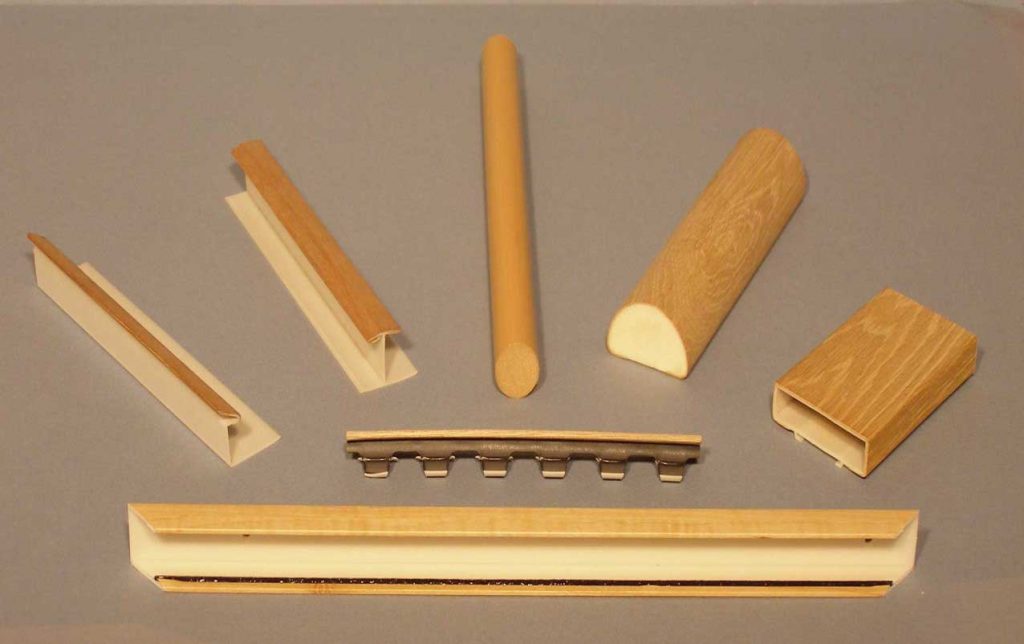
The use of wood in thermoplastic extrusion is a relatively new technology with extensive market growth over the last decade or so. Wood Composite profiles are extruded using Wood Plastic Composite (WPC) resins. WPCs are compounded using 30-60% wood filler in the form of wood flour or wood fiber both of which are available from recycled sources. These wood fillers are combined with plastic resins like High Density Polyethylene (HDPE), Polypropylene (PE), PVC, and ABS and are processed by extrusion into variously shaped profiles (both hollow and solid) that retain many of the favorable qualities and aesthetics of wood but offer enhanced properties provided by the thermoplastic.
Corrosion Resistant Outdoor Wood Composite Profiles
 Wood Composite profiles offer good strength to weight ratio, are durable with good dimensional stability, and are relatively inexpensive. Specialty grades can offer water, insect, corrosion and mildew resistance making them ideal for outdoor applications. Wood Composite profiles may be colored and provided with a wood grain although no surface finishing is necessary. Wood Composite profiles may be sanded, drilled or painted giving them great flexibility in the building industry. Wood Composite profiles are good for the environment because they can be comprised mostly of waste products. Most WPCs are produced by combining low value, recycled wood flour or fiber with recycled thermoplastic resins resulting in a higher value, performance enhanced material that also maybe recycled. The American Chemistry Council (ACC) says that more than 650 million lbs. of plastic bags and film are recycled annually, with products like wood plastic composites accepting the waste stream. Wood Composite profiles offer a good cost effective, eco friendly alternative to many solid wood products.

 Skip to content
 TheAdfirm.